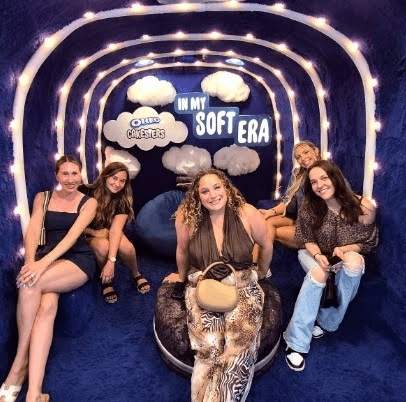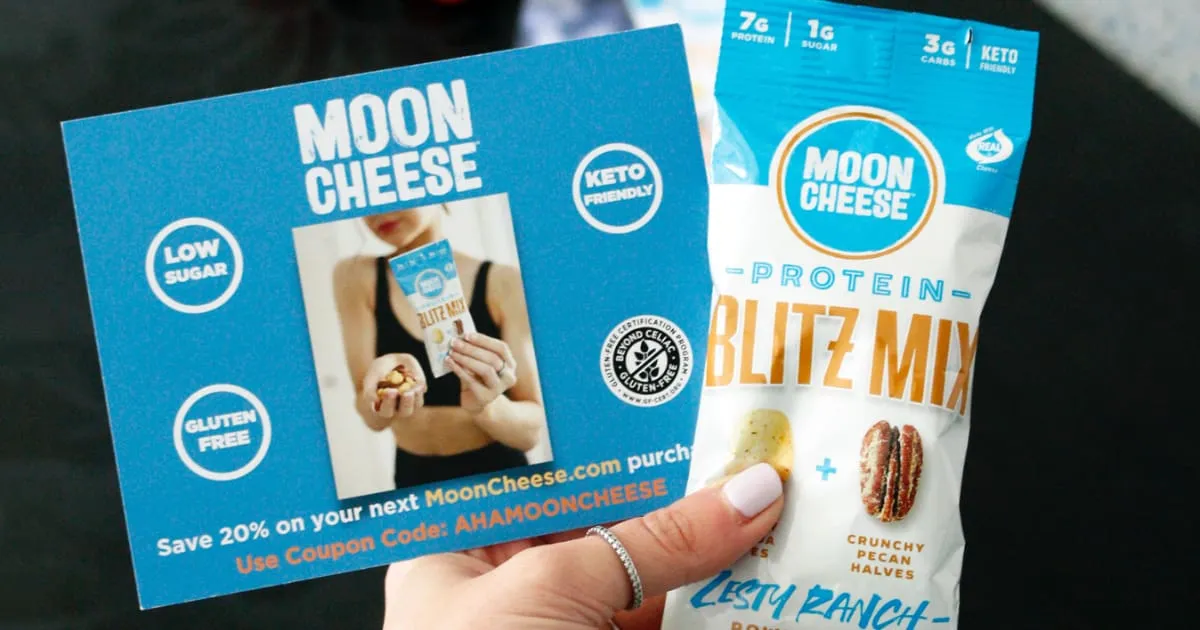
A product felt in the hand gets encoded differently than one only seen. Here is what the research says, and what it means for CPG marketers.
Fewer than one in five people who see an advertisement will remember it the next day and attribute it to the correct brand. That statistic, from widely cited research on advertising recall, says a great deal about how memory works and what it takes to earn a lasting place in it.
CPG marketers spend billions every year on impressions, reach, and frequency. The return is real, especially at the awareness stage. But somewhere between a consumer recognizing a brand name and reaching for it on a shelf, a significant share of that spend quietly disappears. The gap between awareness and purchase is where most marketing budgets go to work and, too often, where most of them get stuck.
Sampling closes that gap, and it does so because of how the brain processes a physical product experience compared to a visual one.
The Brain Treats Physical Experience Differently
When a consumer sees a brand in a social post, a display ad, or a television spot, the brain processes it as information. It registers, evaluates, and in most cases files it away or discards it. The limbic system, which governs emotion and lasting memory formation, is far less engaged. There is little to feel.
When a consumer holds a product, opens it, smells it, and tastes it, the experience is categorically different. The somatosensory cortex activates. The limbic system engages. Emotion enters the transaction. And emotion is one of the most reliable predictors of whether a memory will form, persist, and connect to a future behavior.
Researchers call the touch component of this haptic memory: the brain’s capacity to retain information associated with touch and physical sensation. Scent and taste form lasting memories of their own. Together, they explain how someone can recall the texture of packaging they have not handled in years, or the smell of a product they tried once at a gym and later sought out at a store.
Sensory input creates anchors. Brand name, product benefit, and category all attach to those anchors and get carried forward into the next purchase moment.
An advertisement asks the brain to do significant work: observe something, connect it to a brand, store the association, and retrieve it weeks later while standing in an aisle. A sample builds that association directly, at the sensory level, without asking the brain to bridge the gap on its own.
“A product felt in the hand gets encoded differently than a product only seen. That is not a metaphor. That is how memory works.”
The practical implication for brand marketers is straightforward. Advertising builds familiarity. Sampling builds memory. And the consumer standing at shelf, reaching for one product over another, is not pulling from familiarity alone. They are pulling from memory, and the brands with the strongest sensory anchor in that moment tend to win.
Context Is the Other Half of the Equation
The neuroscience explains why sampling works. Context explains when it works best.
Sensory memory does not form equally in all circumstances. A sample handed to a distracted person at a crowded event may register differently than one received at a moment of genuine openness. The brain encodes not just the sensory experience itself but the surrounding context: where the person was, what they were doing, and how they felt. A sample that arrives in a relevant setting arrives with stronger emotional framing, and stronger emotional framing means a more durable memory.
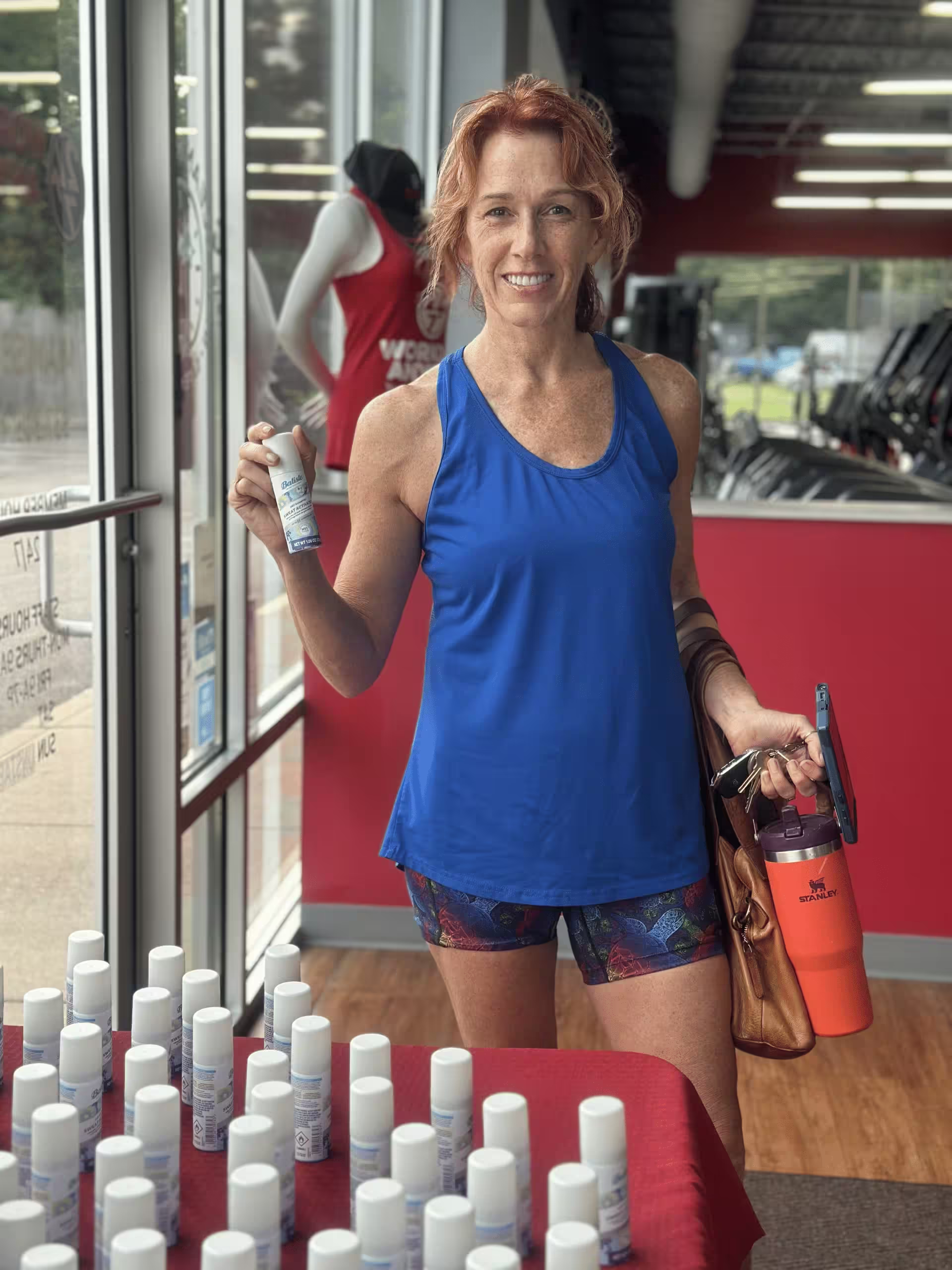
This is why need state matters as much as the sample itself. When a consumer is dealing with a trigger relevant to the category, like an illness, a workout, a long travel day, or the start of a new routine, they are not simply open to a product. They are in active search mode. The category has become urgent. A sample in that moment does not have to earn attention. It already has it.
Need states are not abstract. They show up on calendars: cold and flu season, back-to-school, the new year resolution window, and allergy season. Each one is a recurring moment when entire consumer segments shift into a heightened state of category receptivity, and each one is a predictable window that brands can plan around with the right sampling placement.
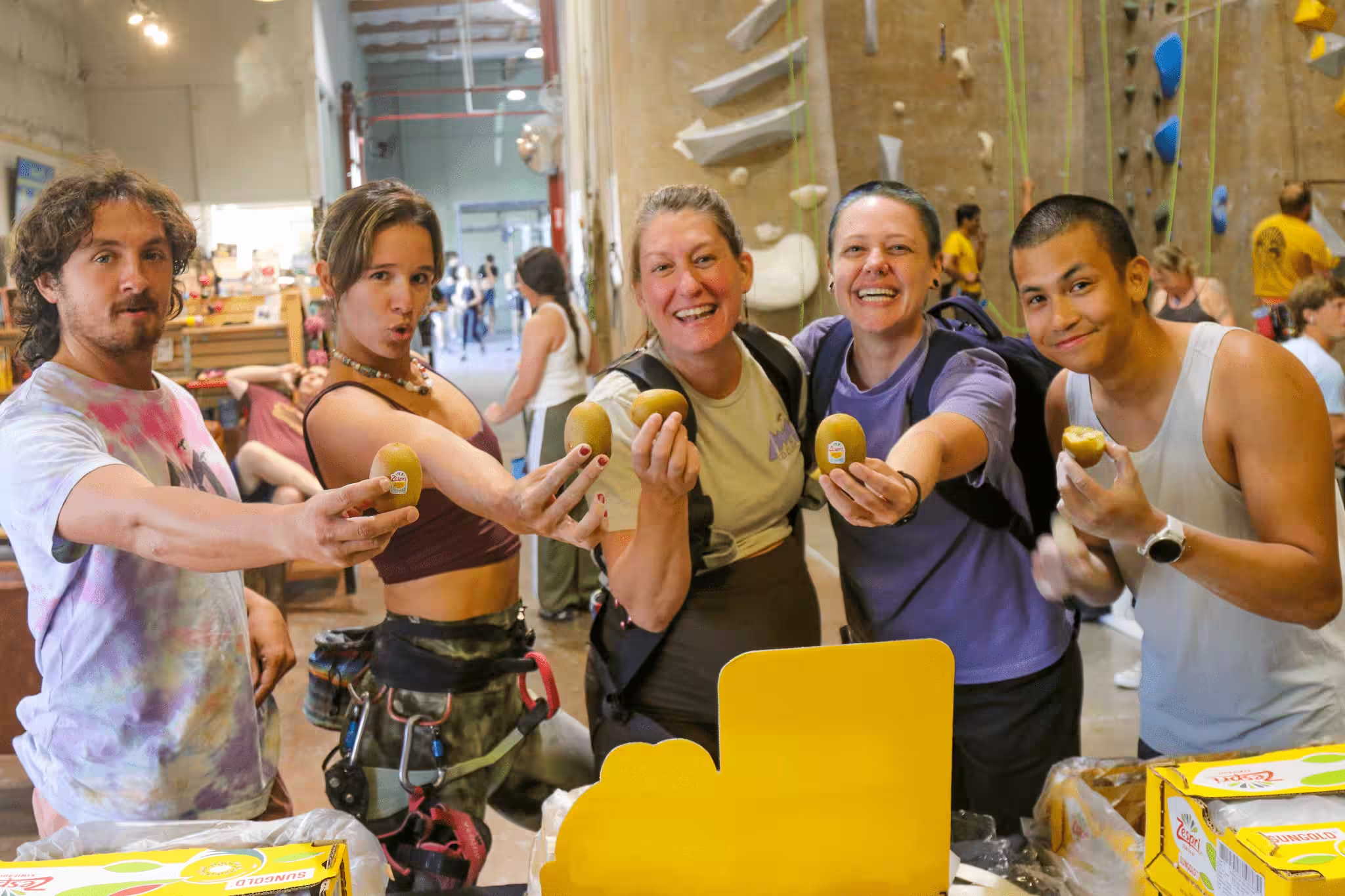
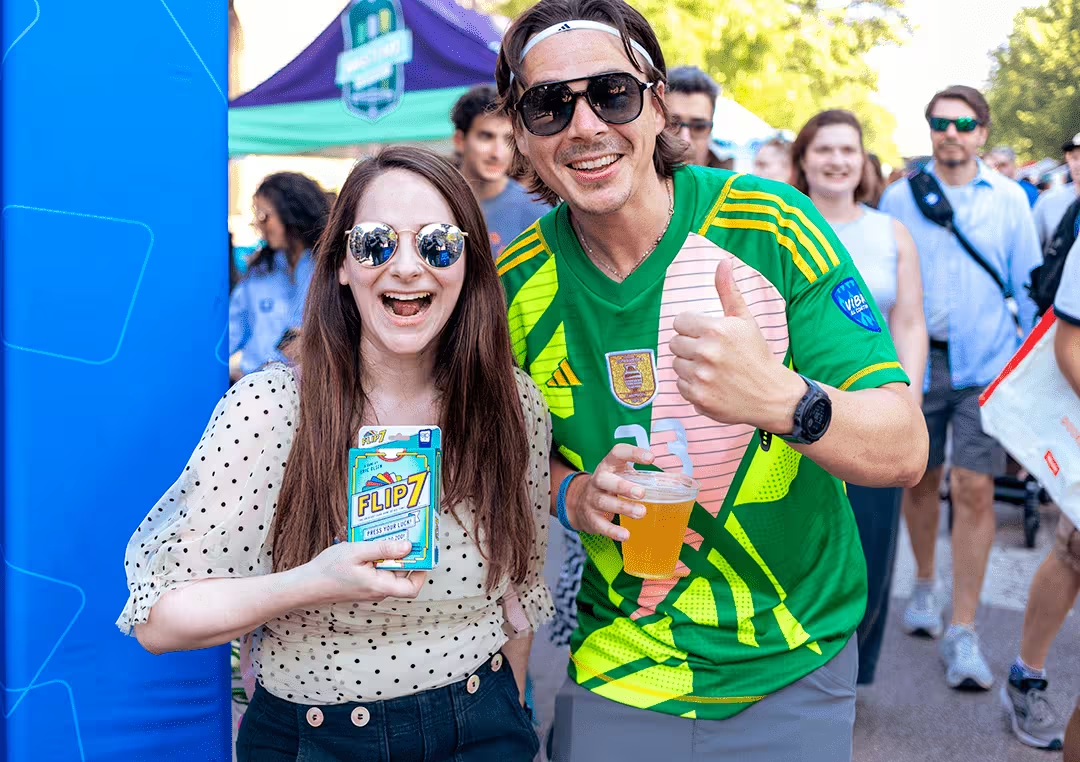
Aha! research has consistently found that purchase intent increases when products reach consumers during moments of genuine receptivity, inside a relevant context and through a venue that creates the right emotional framing. This summer, Clif Z Bar activations at youth-oriented venues earned a 93% recommendation rate among consumers who tried it, and five years of Zespri SunGold sampling have sustained 96% average purchase intent. The pattern is consistent: relevance and timing drive stronger outcomes than raw reach alone.
The Life Change That Creates an Open Door
Need states create urgency. A different kind of moment creates something even more valuable: a category with no prior occupant.
Researchers and sampling strategists call this a point of market entry: the life change that pushes a consumer into a category they had no previous reason to shop. Examples include going to college, having a baby, adopting a pet, getting married, and moving into a new home. In each of these moments, existing habits have been disrupted and new ones are actively forming. There is no competitor to dislodge because there is no established preference at all.
The research on this is striking.

A physical product experience inside one of these windows is not just a sample. It is a first impression in a category with no prior occupant, and first impressions in empty categories tend to become the default.
The Roles of Advertising and Sampling Are Distinct
Advertising and sampling are not in competition. They play distinct roles in the same system, and brands that understand the difference use both more effectively.
Advertising earns awareness at scale. It makes a name familiar, primes a consumer to recognize a brand on a shelf, and reduces the friction of a first encounter. That work is real and it matters. Advertising plants the seed.
But awareness is not preference. And the gap between them is where a meaningful share of CPG marketing investment goes without generating the trial that creates actual buyers.
Sampling converts awareness into preference. A consumer who has experienced a product, who has a sensory memory tied to it formed in a relevant context, is not dependent on advertising to remind them why they should buy it. The product already made its case, directly, through the senses most reliable for encoding lasting memory.
“The strongest programs use both. Advertising builds the audience. Sampling converts it.”
The timing and context of the sample determine how durable that conversion turns out to be. A brand that earns a consumer’s sensory memory in the right moment, in the right venue, at the right inflection point in their life, does not have to keep spending to remind them it exists.
What the Data Consistently Shows
The research on sampling effectiveness points consistently in the same direction.
.png)
That gap reflects a fundamental difference in how the brain responds to experience versus exposure.
Those figures describe sampling in general. The outcomes improve further when sampling is placed in a genuinely relevant venue at the right moment for the right consumer. An energy bar at a gym outperforms an energy bar at a bank. A cold remedy at a pediatric office outperforms one at a hotel lobby. The product does not change. The context does.
“Reach without relevance is the same problem advertising already has.”
This is the core logic behind placing products in opt-in venue networks rather than busy environments with little relevance. The value of a sampling program is not the volume of units distributed. It is the quality of the consumer moment those units land in.
Planning Ahead Is What Separates the Brands That Win Each Window
The fall and winter stretch is one of the densest need state periods in CPG. Cold and flu season arrives on a predictable schedule. The new year resolution window, one of the most powerful resets in consumer behavior, begins building momentum in December and peaks in early January. Engaged couples planning their weddings and building new households together create category entry moments across dozens of product types.
The brands best positioned to capture consumer moments are those that build their sampling infrastructure well ahead of the season. Sampling programs require meaningful lead time: venue coordination, fulfillment logistics, field staffing, product supply, and brand training for the people placing products in consumers’ hands.
The brands winning the 2027 need state windows are already in planning conversations. The question to bring to the table now: where will your consumers experience your product?
That question is a sampling strategy question. And the answer to it, delivered in the right context at the right consumer moment, tends to produce the kind of brand memory that advertising has always been trying to create.
How Aha! Builds Programs That Convert
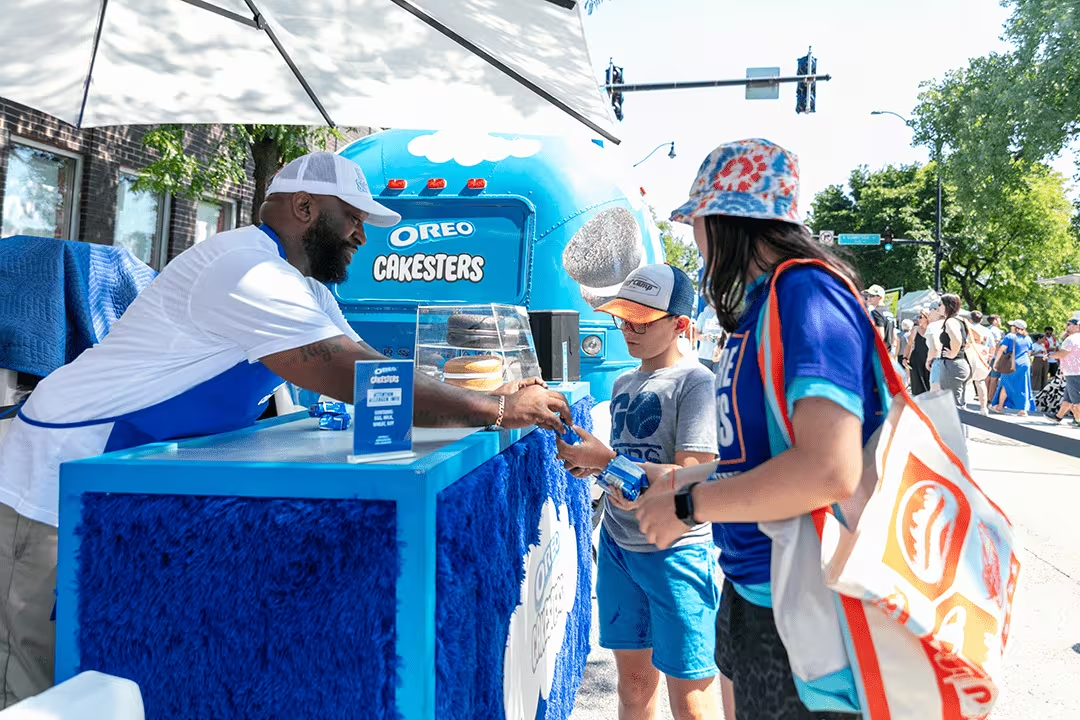
Aha! Marketing places products directly in consumers’ hands across fitness studios, healthcare offices, schools, hotels, workplaces, veterinarian offices, first responder headquarters, bridal expos, and more. The network spans thousands of opt-in venue partners across the United States and Canada, each chosen because it creates the kind of relevant, trusted context where sampling converts.
Every program is built around the same logic: identify the right consumer, reach them at the right moment, in a setting that gives the product the best possible chance of forming a durable sensory memory. That is the difference between a sample that gets tried once and a brand that earns a repeat buyer.
Let’s build a program now.
Longer lead times produce better programs. The right venues take time to coordinate, and the right consumer moments do not wait.