Most marketing competes for attention. The best marketing finds people when they are already looking for something. That difference, timing versus interruption, is the foundation of every sampling strategy that actually converts.
Three terms get used almost interchangeably to describe this idea: need-state, point of market entry, and occasion sampling. They are related, but they are not the same thing, and treating them as synonyms leads to the wrong creative reaching the wrong audience at the wrong moment.
Point of Market Entry
─── BECOMING A SHOPPER IN A CATEGORY FOR THE FIRST TIME
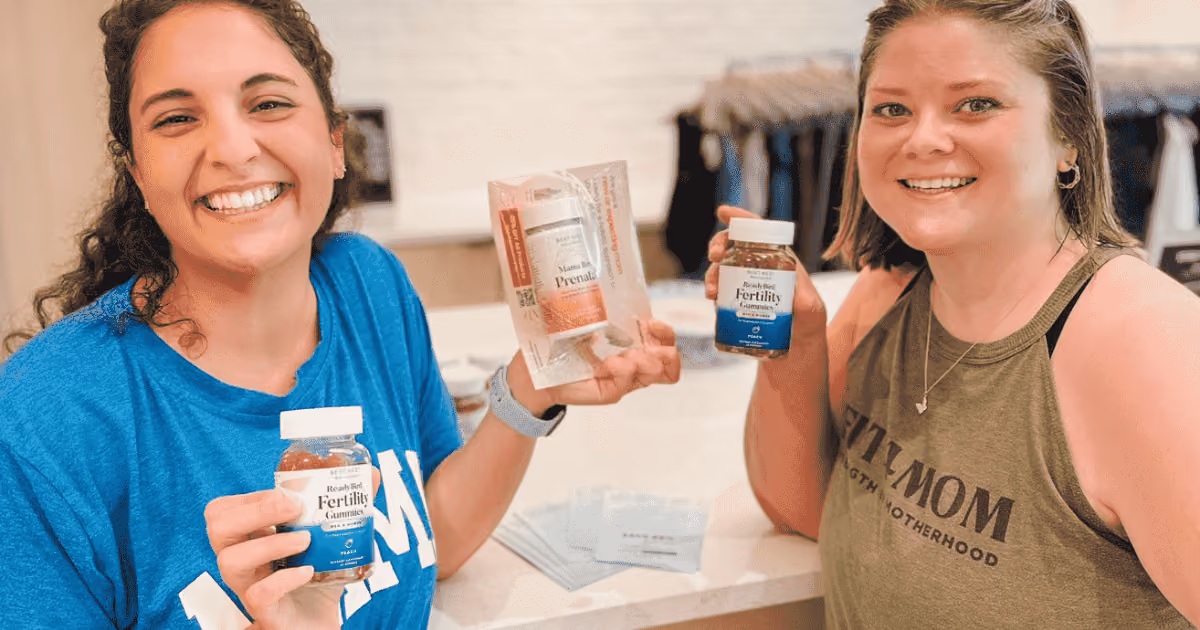
A point of market entry happens when a life change pushes someone into a category they had no reason to shop in before. Going to college, having a baby, adopting a pet, getting married. None of these people were thinking about dorm snacks, baby wipes, pet food, or wedding registries until the life change put them there.
This is what makes the window so valuable. There is no competitor to dislodge, because there is no existing habit at all. Brand loyalty has not formed yet, which means the first credible brand in front of someone often becomes the default.
The research backs this up. Adults are 75 percent more likely to try new brands following a major life event. During a home move specifically, about 65 percent of consumers switch suppliers or try new brands. The college category shows just how concentrated this window is: 92 percent of college grocery purchases happen after a student arrives on campus, not before.

Aha! relevant venues: colleges and universities, bridal expos, wedding dress boutiques, tux shops, animal shelters, birthing centers, OB/GYN, childcare centers
Need-State
─── WHEN A RECURRING TRIGGER CREATES URGENCY
A need-state is different. It is not about being new to a category, it is about an existing category suddenly becoming urgent. The clearest example is cold and flu season. The shopper has almost certainly bought cold medicine before. What changes is not their familiarity with the category, it is that today they feel terrible and need relief now.
Need-states recur. They show up on a calendar (allergy season, flu season) or a personal trigger (a workout, a stressful week, a hangover), and they come back again and again. The conversion opportunity is not about introducing someone to something new, it is about being physically present the moment the need activates. Aha!'s research has consistently found a meaningful lift in purchase intent when a product reaches consumers during a relevant need-state compared to reaching the same consumer outside of it.
Across Aha! campaigns, we've seen purchase intent increase when products are introduced at moments when consumers are naturally receptive to them. While the exact results vary by category and program, the pattern is consistent: relevance and timing drive stronger outcomes than reach alone.
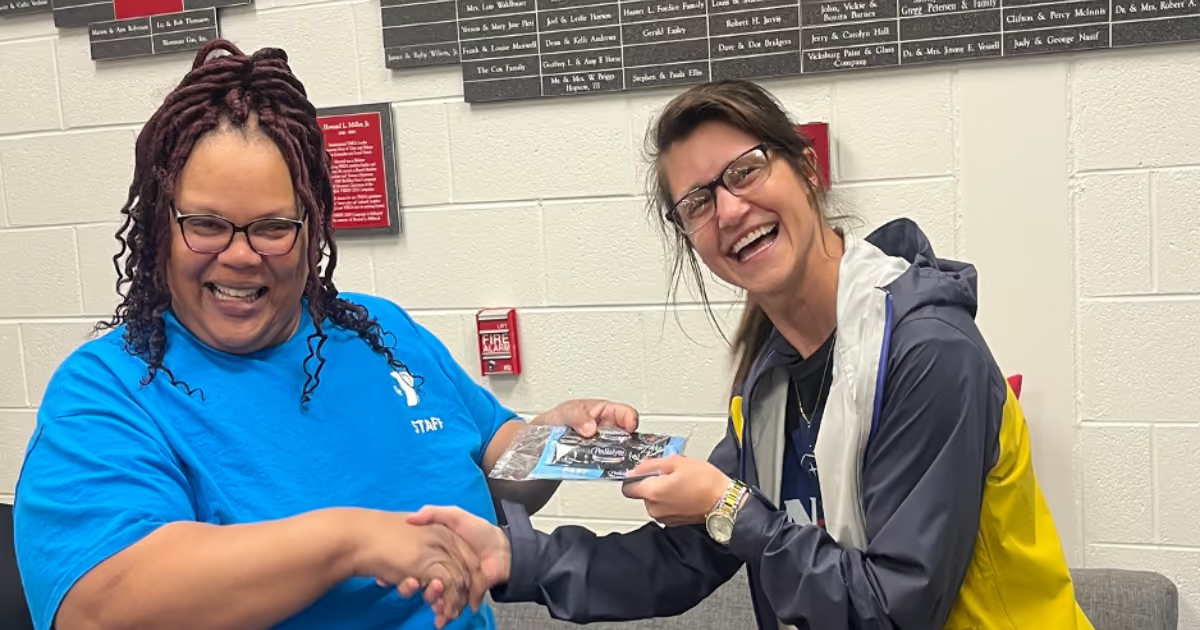
Aha! relevant venues: medical offices, urgent care centers, fitness centers, sports & recreation, community centers, colleges.

Occasion Sampling
─── THE SETTING, NOT THE PSYCHOLOGY
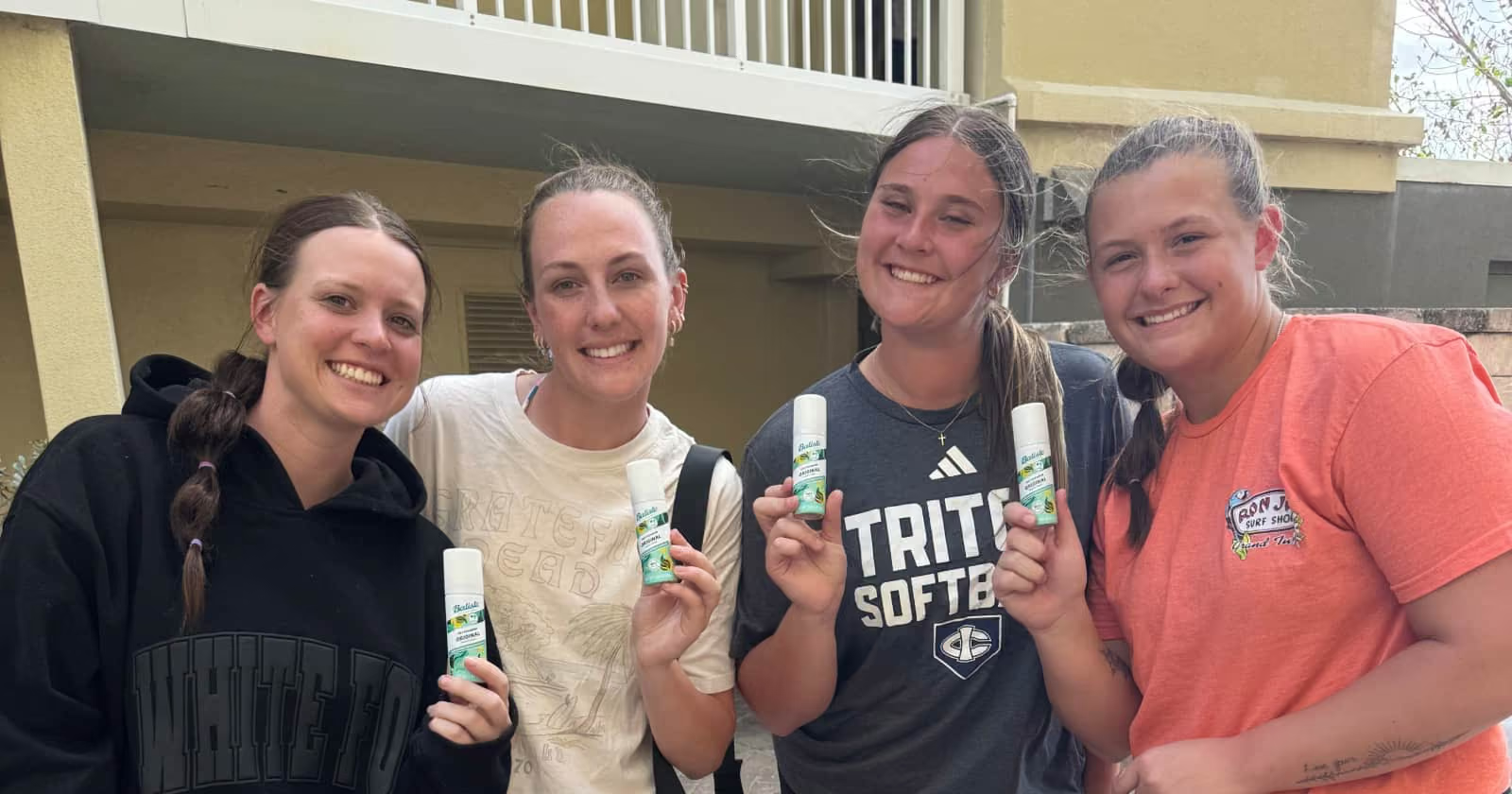
Occasion sampling describes where and when a product physically gets into someone's hand, a state fair, a tailgate, a campus move-in day, a 5k finish line. It is a delivery mechanism, not a psychological state, which is why it can serve either of the other two. A college move-in event reaches a point of market entry audience. A race finish line reaches people in an active need-state for hydration or recovery. The occasion is the venue. The need-state or point of market entry is the reason it works.
Where the Three Overlap, and Where They Do Not
All three outperform generic advertising for the same underlying reason: relevance plus timing beats impressions. Sampling overall is more effective at driving trial than advertising, 73 percent of people are more likely to buy after trying a sample, compared to 25 percent after seeing an ad. But not every sampling moment is created equal. A point of market entry tells you who to reach (someone new to the category). A need-state tells you when to reach them (the moment urgency activates). Occasion sampling tells you where to physically make that happen.
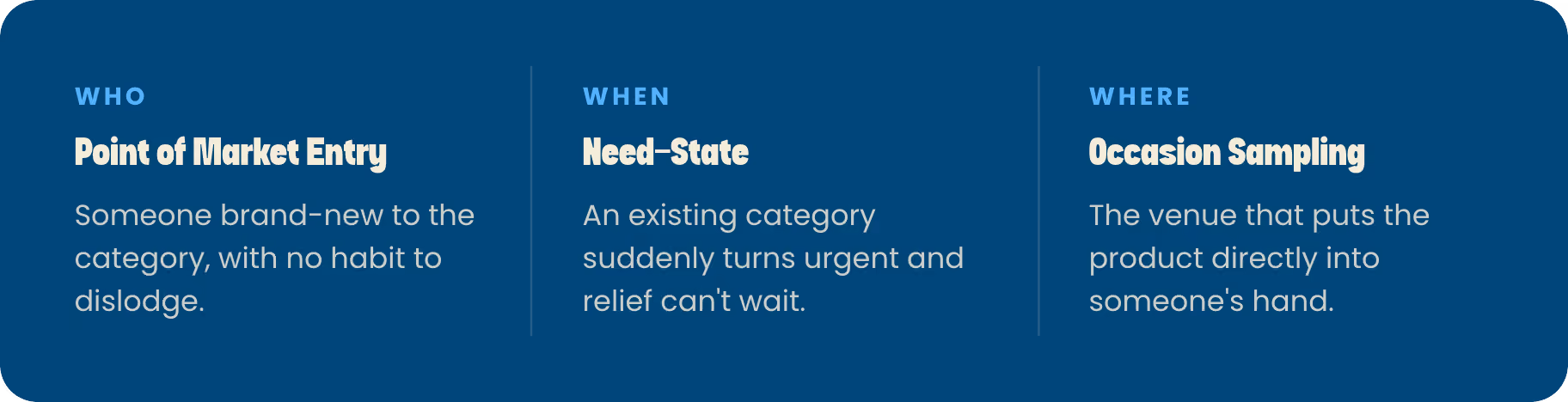
The strongest programs use all three together: identify the right audience, time it to the right trigger, and choose a venue that puts the product directly in hand.
What This Means for the Back Half of 2026
Summer turning into fall is the most need-state-dense stretch of the year, and all three concepts show up at once. College move-in is a textbook point of market entry. Allergy season and the return of back-to-school illness are need-states arriving right on schedule. State fairs, tailgates, and campus events are the occasions where both can be activated in person.
Brands that plan in advance are the ones positioned to be the first sample in someone's hand at exactly the right moment.