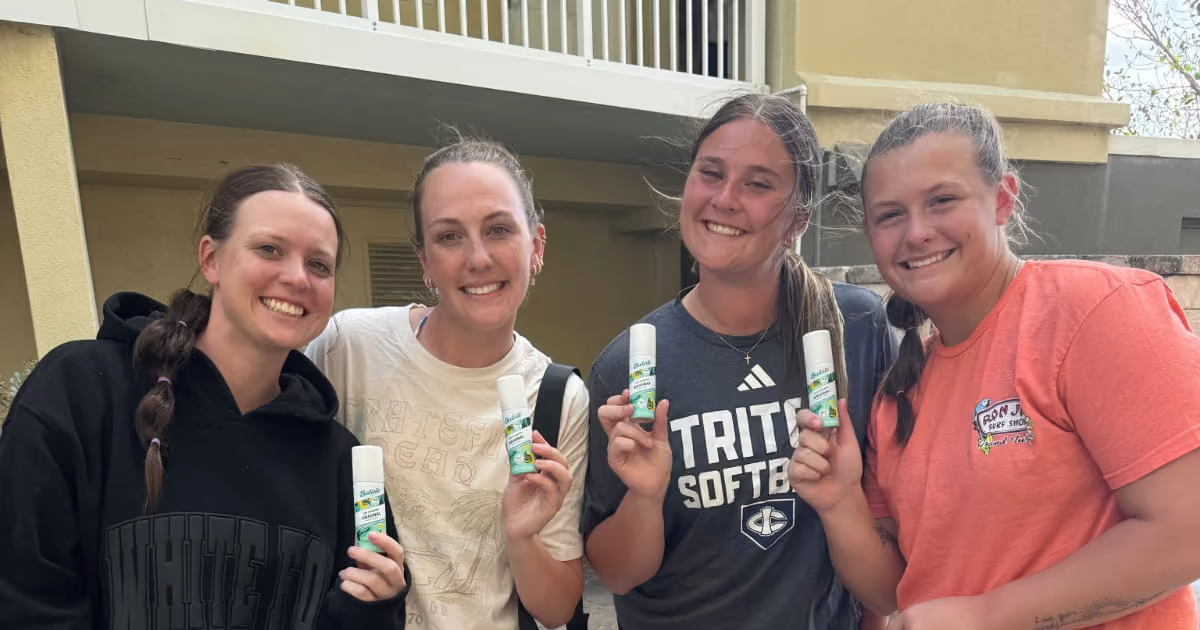

Distributing thousands of product samples sounds impressive until you realize half went to people who will never buy your product. A teenager received your anti-aging serum. A vegan got your beef jerky. You've wasted samples, budget, and opportunity.
The solution isn't sampling more broadly. It's sampling more strategically through audience segmentation.

What is Audience Segmentation?
Audience segmentation is the practice of dividing your total addressable market into distinct groups based on shared characteristics, behaviors, needs, or preferences. Rather than treating all consumers as one group, segmentation recognizes that different audiences have different motivations and product needs.
The most effective audience segmentation uses multiple criteria to create precise target groups. For example, instead of targeting "parents," you might segment to "health conscious parents of toddlers in urban areas who prioritize organic products."
Why Audience Segmentation Matters for Product Sampling
Product sampling is most effective when it reaches consumers who are genuinely likely to become customers. Audience segmentation ensures your sampling investment focuses on these high potential consumers.
Maximizes Conversion Rates
When samples reach people who actually need and want your product, conversion rates skyrocket. Strategic audience segmentation identifies these ideal prospects.
Improves Cost Efficiency
Every sample represents a cost. Audience segmentation ensures you're investing in reaching consumers with high lifetime value potential rather than wasting resources on unlikely buyers.
Generates Better Data and Insights
When you segment your audience and track results by segment, you gain valuable intelligence about which consumer groups respond best to your product.
How to Use Audience Segmentation for Product Sampling
Start with Clear Customer Profiles
Before you can segment effectively, understand who your ideal customers are. What problems does your product solve? Who experiences these problems most acutely? Create detailed profiles to guide your segmentation strategy.
Identify High Value Segments
Not all audience segments are equally valuable. Prioritize segments based on purchase likelihood, potential lifetime value, segment size, and accessibility.
Choose Strategic Distribution Channels
Once you've identified target segments, determine where these consumers naturally gather. Aha! Marketing's proprietary network of trusted venues across health, wellness, fitness, nutrition, education, and pet lifestyle categories allows precise audience segmentation through venue selection.
Track Performance by Segment
Measure results separately for each audience segment you target. This reveals which segments deliver the best return on investment.
The Power of Trusted Venue Partners in Audience Segmentation
Traditional product sampling often relies on high traffic locations. The problem? High traffic doesn't equal relevant traffic. Audience segmentation requires precision that mass distribution can't provide.
Strategic venue partnerships transform product sampling effectiveness. When you distribute samples through trusted professionals serving specific audience segments, you achieve targeting precision impossible through other channels.
Aha! Marketing has built relationships with thousands of venue partners across the US and Canada. These partnerships enable audience segmentation at scale, combining the reach needed to move business metrics with the precision required to maximize conversion.
Best Practices for Audience Segmentation in Product Sampling
- Don't Over Segment: While precise targeting matters, creating too many micro segments can fragment your efforts. Focus on the most meaningful distinctions.
- Test and Learn: Use product sampling as an opportunity to test which segments respond best, then refine your approach based on real performance data.
- Consider Segment Accessibility: A highly attractive audience segment doesn't help if you can't reach them efficiently.
- Look Beyond Demographics: Psychographic and behavioral factors often predict purchase behavior more accurately than age or gender.
Measuring Success of Segmented Product Sampling
The value of audience segmentation becomes clear when you measure results. Track key metrics by segment: sample to purchase conversion rates, speed of conversion after sampling, repeat purchase rates, and customer lifetime value. Compare performance across segments to identify your highest value audiences.
Getting Started with Audience Segmentation
Effective audience segmentation doesn't require complex data science. Start with what you know about your current customers, make informed hypotheses about which segments to target, and use product sampling to test and validate your assumptions.
The key is moving from broad distribution to strategic targeting. Every sample should reach a consumer who matches your ideal customer profile.
Ready to get in front of the right audience?
Aha! Marketing combines strategic audience segmentation with our proprietary network of trusted venues to ensure your product samples reach consumers who are most likely to become loyal customers. Contact us to discuss how audience segmentation can transform your product sampling results.