Don’t Rely on Screens to Drive Your Sales
Screens transmit two senses: sight and sound. For a lot of products, that is enough. Software, streaming services, and apps make their case through visuals and language, and the product delivers on what the eye can evaluate.
But some products live or die in the experience itself. Their value proposition cannot be displayed. It has to be felt, smelled, tasted, or touched. For these categories, a screen makes a poor salesperson.
This distinction determines whether your marketing budget is working for or against your product.
The Sensory Gap in Modern Advertising
The promise of digital advertising has always been reach: get your message in front of enough people and enough of them will convert. That logic holds for products where the ad can accurately represent the experience. When the product’s core benefit is sensory, the math breaks down.
Consider what a consumer is actually being asked to do when they see an ad for a moisturizer, a fragrance, or a premium food product. They are being told that the product is exceptional. They have no way to verify that claim until they spend money. For a category where the experience is the differentiator, that is a significant ask.
Advertising for sensory products succeeds at building awareness. It does not close the gap between "I’ve heard of this" and "I trust this enough to pay for it." Product sampling closes that gap in a single moment.
The Kiwi That Advertising Could Not Sell

The golden kiwi is a textbook example of a product that needs to be tasted to be understood.
A Zespri SunGold Kiwifruit costs roughly a dollar more per pound than a standard green kiwi. That premium needs to be justified to a consumer standing in the produce department, weighing a familiar option against an unfamiliar one. No campaign creative, however well produced, can make that case the way a single bite can.
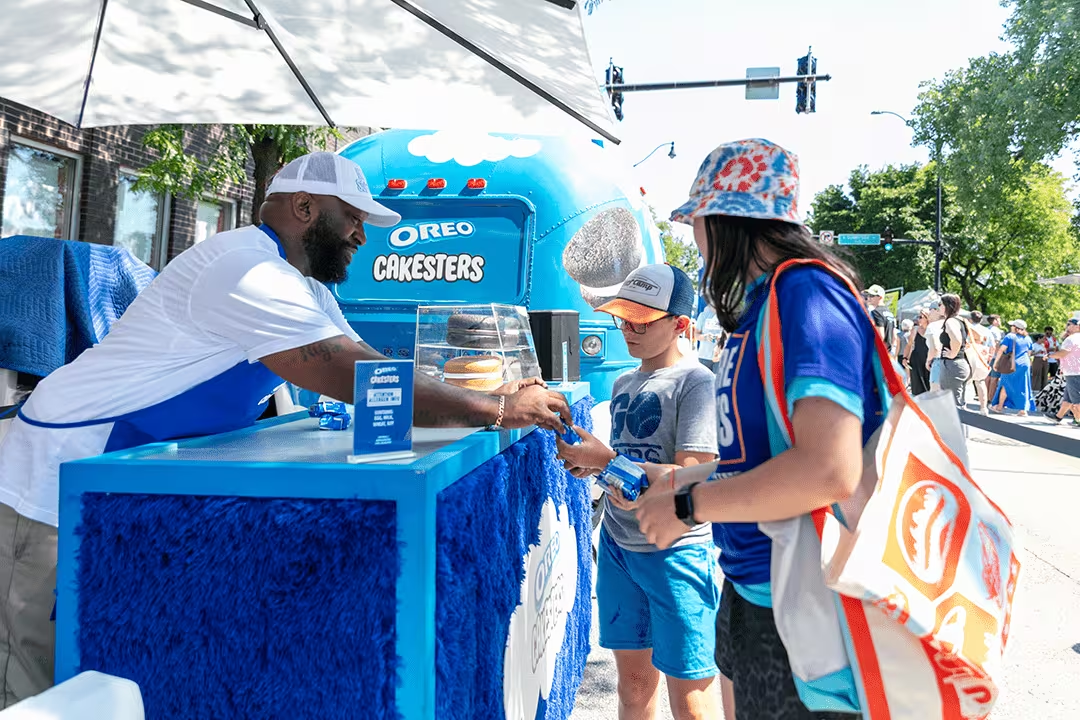
Aha! has been getting Zespri SunGold into consumers’ mouths for five years running. Across that tenure, Aha! has maintained 96% average purchase intent. 100% of participants said they would recommend SunGold to friends and family. Those results didn’t come from standout creative. They came from handing people a sample and letting the product make its own argument.
The price premium justified itself the moment people tasted it. That is not something language can do.
What the Research Says About Sensory Trial
The data on experiential marketing is consistent across sources. According to Splash’s event marketing outlook, 77% of marketers say experiential events outperform digital advertising, email marketing, and content marketing combined.
Product sampling specifically outperforms advertising at driving trial. When asked what would get them to try a new product, 73% of consumers said a sample, compared to 25% who said a TV ad. That gap is not a rounding error. It is the difference between describing what something tastes like and letting someone taste it.
Consumers know the difference between being told something is good and experiencing it for themselves. They trust one of those far more than the other. When the experience validates the claim, whether the razor actually does glide differently or the laundry scent actually does register as clean in a way no ad copy captures, no impression spend can replicate that conversion moment.
Which Products Have a Sensory Case to Make
Not every product is a candidate for product sampling as its primary trial driver. The question worth asking is whether the product’s core differentiation is something a screen can represent accurately. If the answer is no, sampling is not just one option among many. It is the most direct path from awareness to purchase intent.
The categories where sensory trial consistently outperforms advertising include the following.
Food and Beverage That Wins on Taste
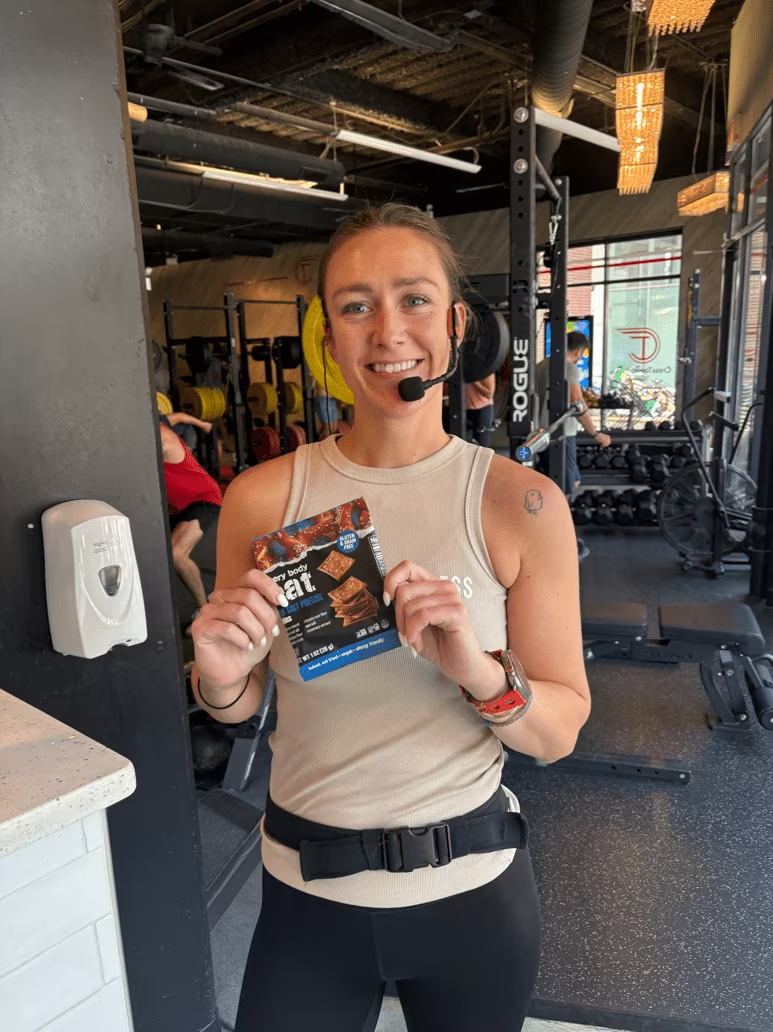
Specialty coffee, functional beverages, premium snacks, and any food whose pitch is "you have to try it" all convert on taste, not impressions. A product priced above the commodity tier especially needs the trial moment to justify the premium, because the premium cannot be argued. It can only be experienced.
Personal Care and Beauty
Skin feel, fragrance, and texture are the purchase drivers in this category, and they are the hardest qualities to communicate through a screen. A moisturizer that disappears into skin, a deodorant with a genuinely distinctive scent, and a cleanser with an unusual texture all convert on contact. The brand story is secondary to what the product actually does.
Household Products with a Sensory Differentiator
Fabric softeners, cleaning products, and home fragrance items compete on a dimension a digital impression cannot deliver. When the differentiator is the way something smells when laundry comes out of the dryer, or the way a cleaner leaves a surface feeling, the product has to get into the home to make its case.
Building a Product Sampling Strategy Around the Sensory Moment
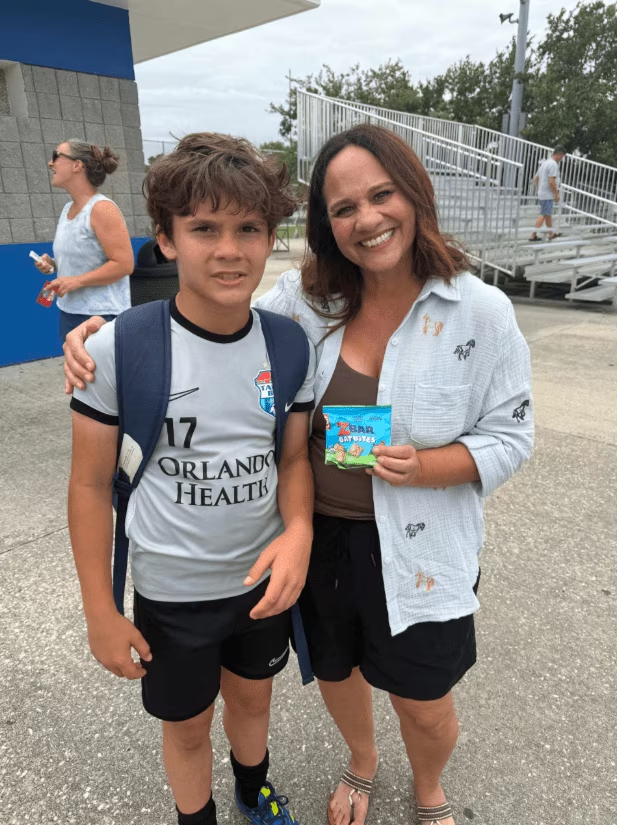
Knowing that your product needs to be tried is the first step. The second is designing a distribution strategy that puts the product in front of the right consumer at the right moment.
The venue matters as much as the sample itself. A sports drink reaching a runner at a 5K finish line is reaching someone whose body is already in the relevant state. A skincare product distributed in a boutique fitness studio is reaching a consumer who has just worked out and whose skin is exactly the canvas the product is designed for. The right venue creates the right context, and context determines whether the trial moment converts.
Aha! operates one of the largest opt-in venue partner networks across the United States and Canada, including fitness studios, healthcare offices, schools, hotels, YMCAs, and workplaces. In each of these settings, the right consumer is already in a receptive state for the right product. The venue is not just a delivery channel. It is part of the argument.
The Cost of Telling Instead of Showing
For products where the experience is the differentiator, every dollar spent telling instead of letting people try is a dollar working against conversion. The product’s best argument is the product itself. Everything else is description.
The brands that understand this build product sampling into their awareness strategy from the beginning, not as an afterthought but as the primary driver of trial. They identify the venues where their consumer is already present and already open. They design the sample moment to mirror the real use context. And they measure the outcome in purchase intent, not impressions.
The proof is in the senses.
Ready to let your product make its own case? Let’s build a sampling strategy for your brand.